


How to Sell Excess Electronics Stock in the UK

If you need to sell excess stock in the UK, timing matters more with electronics than with almost any other category. A mobile phone, laptop or tablet that sits in a warehouse loses value every month, especially once a newer model is announced. Storage costs keep running, and the cash tied up in that stock cannot be used elsewhere.
This guide is written for suppliers, distributors, retailers and resellers holding surplus electronics. It explains how to prepare the stock, compares six ways to sell it and shows what to check before choosing an excess stock buyer.
What Counts as Excess Electronics Stock?
Excess electronics stock is any inventory a business holds beyond what it can sell through its normal channels in a reasonable time. It is usually new or lightly used, but it no longer fits the seller's plans, so it needs a different route to market.
Common types include:
- Overstock: units ordered in larger quantities than demand required
- End-of-line models: devices replaced by a newer version
- Ex-display units: stock used for demonstrations in shops or showrooms
- Customer returns: items sent back by buyers, often in opened packaging
- Refurbished units: devices repaired and tested but not yet resold
- Cancelled orders: stock left over when a large buyer withdraws
Each type sells differently. Sealed overstock attracts more buyers and better prices than mixed customer returns, so it helps to keep them separate.
Why Excess Electronics Stock Loses Value Fast
Electronics follow short product cycles. Major phone and laptop brands release new models every year, and each launch pushes down the resale price of the previous generation. Buyers also become more cautious as a model ages, because software support, spare parts and warranty cover become less certain.
There are also costs that grow quietly in the background:
- Storage: warehouse space, insurance and handling
- Tied-up cash: money that could fund new, faster-selling stock
- Battery health: lithium batteries in stored devices degrade over time
- Admin: stock counts and write-off decisions take staff time
For these reasons, a fair price today is often worth more than a higher price that may arrive several months later.
Preparing Your Stock Before You Sell
Buyers make faster and firmer offers when they know exactly what they are buying. A short preparation step can raise both the price and the number of offers.
Build a clear stock list
A simple spreadsheet works well. For each line, it helps to list the brand, model, storage or specification, colour, quantity, condition and packaging. Grouping identical units together makes the list easier to quote on.
Grade the condition honestly
Clear grades help buyers compare stock with confidence. A common approach is:
- New sealed: unopened in original packaging
- Open box: unused, but the packaging has been opened
- Grade A: used, with minimal signs of wear
- Grade B: visible marks, fully working
- Grade C: heavy wear or minor faults
Overstating condition usually leads to disputes, returns and lost trust, so a conservative grade is the safer choice.
Record IMEI and serial numbers
For phones and tablets, an IMEI list allows buyers to check that devices are not reported lost, stolen or blocked. Serial numbers do the same job for laptops and other devices. Many professional buyers will not make an offer without them.
Wipe data from returned or used devices
Customer returns and used devices may still hold personal data. A full factory reset, together with the removal of account locks such as Find My iPhone or Google account protection, protects previous owners and avoids stock that cannot be resold.
Set your minimum acceptable price
Knowing your lowest acceptable price per unit before talking to buyers makes it easier to compare offers and decide quickly.
6 Ways to Sell Excess Stock in the UK
There is no single best route. The right choice depends on how quickly you need to sell, how much stock you have and how much control you want over the price.
1. Excess and clearance stock buyers
Clearance stock buyers purchase surplus inventory in bulk, often taking the whole lot in one deal. This is usually the fastest route, and it saves time on sorting and listing. The trade-off is price: buyers who take on all the risk expect a significant discount.
2. Liquidation companies and auction houses
Auction houses and liquidators sell stock to a wide pool of trade buyers. Auctions can create competition, but the final price is uncertain and fees are deducted from the result. Our comparison of auctions vs B2B tenders explains how the two models differ. Large mixed loads are also often sold as electronics pallets, which suit buyers who can sort and test stock themselves.
3. Online marketplaces
Platforms such as eBay and Amazon reach a large audience and can return a higher price per unit. However, selling one unit at a time takes effort: photos, listings, customer service, returns and marketplace fees all add up. This route works best for smaller quantities.
4. Your existing trade customers
Current customers already trust your stock and payment terms. Offering surplus units to them at a special price can move stock quickly with little risk. The limit is reach, because existing customers may not need the exact models you hold.
5. Buyers outside the UK
Some surplus electronics sell well abroad, especially in markets where older models are still in demand. Since Brexit, however, customs declarations, duties and paperwork have made exporting to the EU more complex, so this route suits sellers with export experience.
6. B2B tender platforms
On a tender platform, buyers publish what they want to purchase, including the model, condition and quantity. Suppliers then submit offers. Instead of searching for buyers, you can respond to open electronics tenders that match the stock you already hold, and you set your own price in each offer. For tips on writing winning responses, see our guide on how to win tenders.
The table below summarises the main differences between the six routes.
| Route | Speed | Price control | Effort | Best for |
|---|---|---|---|---|
| Clearance stock buyers | Fast | Low | Low | Large lots that need to go quickly |
| Auctions and liquidators | Medium | Low | Low to medium | Mixed stock with no fixed buyer |
| Online marketplaces | Slow | High | High | Small quantities and single units |
| Existing trade customers | Fast | Medium | Low | Models your customers already buy |
| Export | Slow | Medium | High | Sellers with export experience |
| B2B tenders | Medium | High | Medium | Stock that matches a buyer's request |
How to Choose the Right Excess Stock Buyer
Whoever you sell to, a few checks reduce the risk of late payment or disputes. They mirror the checks buyers use to verify a wholesale electronics supplier, applied from the seller's side.
- Company details: a registered company name, address and VAT number that can be checked on Companies House
- Payment terms: when and how payment is made, and whether it is due before collection
- Collection and delivery: who arranges and pays for transport
- Partial purchases: whether the buyer takes the whole lot or only selected lines
- References: feedback from other suppliers or a trading history you can confirm
- Written agreement: price, quantities, condition grades and payment terms confirmed in writing
Surplus stock buyers who offer a price far above others without seeing a stock list deserve extra caution.
Selling Surplus Stock Through B2B Tenders on Moberca
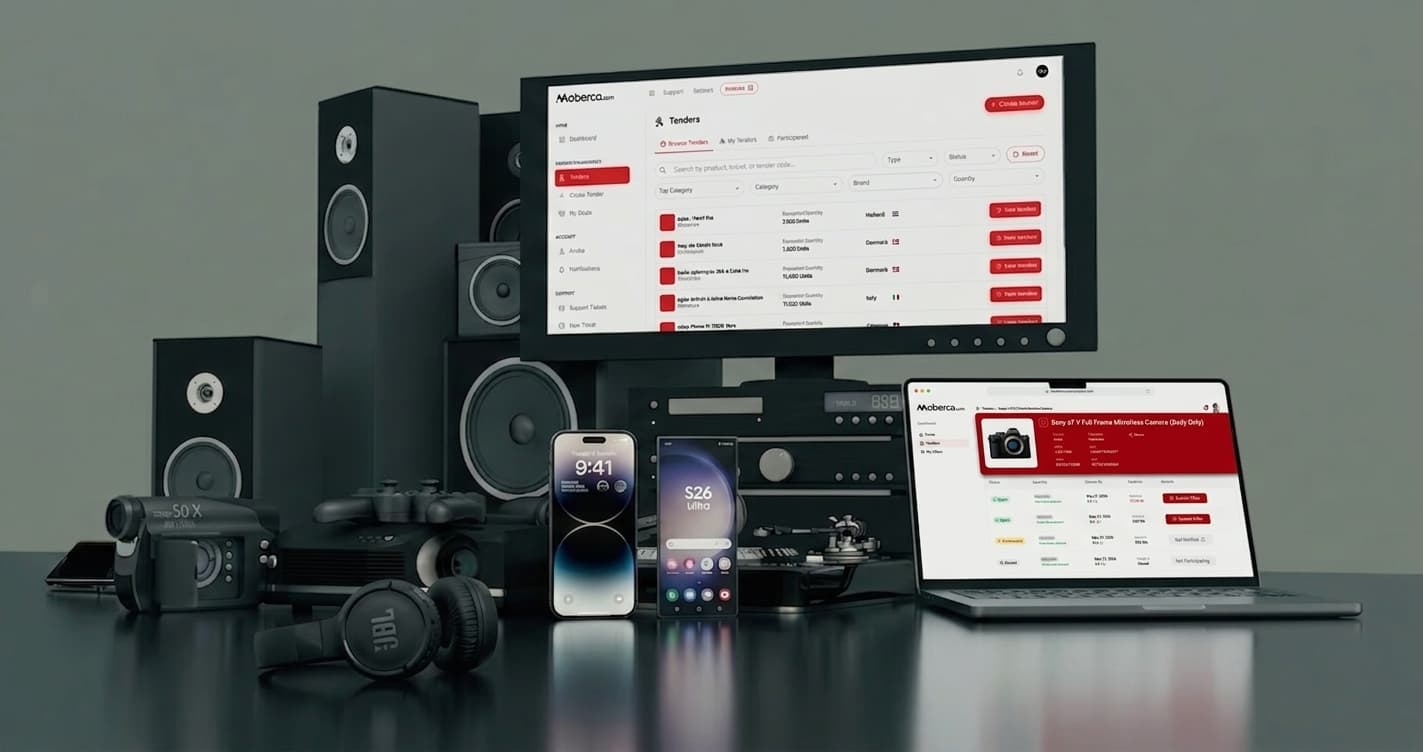
Moberca is a B2B wholesale platform for consumer electronics where verified buyers and suppliers trade through digital tenders. For suppliers holding excess stock, the process looks like this:
- Supplier account: you register your company and complete your profile.
- Open tenders: you browse buyer requests for the products, conditions and quantities they need.
- Your offer: you submit a price and terms for the tenders that match your stock.
- Status updates: you follow each offer and see when a buyer responds.
- The deal: you agree the final terms with the buyer and complete the sale.
Because each tender describes real demand, there is no need to guess what buyers want. The supplier page explains how suppliers join tenders in more detail.
If you hold surplus phones, laptops or other electronics, you are welcome to create a supplier account and view the open tenders.
Frequently Asked Questions
Who buys excess stock in the UK?
Clearance stock buyers, liquidators, auction houses, online resellers, repair businesses and other retailers all buy excess stock. For electronics, B2B tender platforms also connect suppliers with trade buyers looking for specific models and quantities.
How much do excess stock buyers pay?
There is no fixed rate. The price depends on the model's age, condition, quantity, packaging and current demand. Sealed, recent models in single-model lots attract the strongest offers, while mixed or older stock sells at a deeper discount.
Is it better to auction surplus electronics or sell to a clearance buyer?
A clearance buyer is usually faster and more certain, but the price is lower. An auction can achieve more if several buyers compete, though the result is unpredictable and fees apply. Responding to buyer tenders is another option when you want to set the price yourself.
Can I sell customer returns as excess stock?
Yes, as long as they are described accurately. Testing, grading and separating returns from new stock helps buyers price them fairly and reduces disputes.
Do I need to wipe data before selling used devices?
Yes. Personal data should be removed with a full factory reset, and account locks such as Find My iPhone or Google account protection should be switched off. Locked devices are very hard to resell.
What is the difference between excess stock and liquidation stock?
Excess stock is surplus inventory a business still owns and wants to sell, often new or nearly new. Liquidation stock usually comes from businesses closing down or clearing stock urgently, and it is often sold in mixed lots at a deep discount.
Ready to Source Wholesale Electronics?
Join Moberca and start sourcing wholesale electronics through verified B2B tenders. Competitive pricing, transparent process, global reach.
Get StartedRelated Articles

How to Win Tenders: A Practical Guide for Electronics Suppliers
A tender is a formal request in which a buyer asks several suppliers to quote for the same goods under the same conditions. Knowing how to win tenders is less about having the lowest price and more about sending the offer that is easiest to trust and compare.
Wholesale Electronics: How to Source in Bulk Through Verified B2B Tenders
Learn how the wholesale electronics market works in the UK and Europe, which product categories move the most volume, what to check before paying a supplier, and how a digital tender lets you compare several offers side by side.

What Is Wholesale Electronics Trading? A Beginner’s Guide
Anyone sourcing electronics for the first time in bulk quantities will run into terms like MOQ, trade pricing, and tenders. This guide breaks it all down.