


Wholesale vs Retail Electronics: Key Differences
Pricing Structures Compared
Retail pricing is fixed and public — the same price applies to every buyer. Wholesale pricing works differently: it's typically tiered by volume, negotiable, and rarely published openly.
| Factor | Wholesale | Retail |
|---|---|---|
| Price visibility | Negotiated or quote-based | Fixed, publicly listed |
| Volume discounts | Standard, tiered by quantity | Rare, occasional promotions |
| Negotiation | Common and expected | Uncommon |
| Price stability | Can shift with market and currency | Relatively stable |
Order Volume and Minimums
Wholesale suppliers typically set a minimum order quantity, and it varies significantly by category:
- Mobile phones — minimums can range from a few dozen units for smaller traders to several hundred for distributor-level pricing.
- Laptops and computers — often sold in smaller wholesale lots due to higher per-unit value.
- Audio devices and accessories — typically have lower minimums given lower per-unit cost.
- Liquidation or surplus stock — sometimes sold in fixed pallet or container quantities rather than a flexible unit count.
Warranty and Returns: Wholesale vs Retail
Warranty terms are one of the most overlooked differences between the two models.
| Factor | Wholesale | Retail |
|---|---|---|
| Warranty source | Varies — manufacturer, supplier, or none | Manufacturer, consistently applied |
| Returns policy | Negotiated per deal, often limited | Standardized, consumer-protection driven |
| Condition disclosure | Must be explicitly confirmed | Assumed new unless stated otherwise |
Tax and Documentation Differences
B2B wholesale transactions usually involve documentation that a retail purchase never requires:
- VAT or sales tax treatment, which can differ for B2B transactions depending on the buyer's and seller's location.
- Commercial invoices detailing quantity, unit price, and total value for customs and accounting purposes.
- Import/export documentation when the transaction crosses borders.
- Trade or business registration proof, which many suppliers require before offering wholesale pricing.
Which Model Fits Your Business
- If reselling is the goal, wholesale pricing is close to mandatory — retail margins rarely leave room for resale profit.
- If the order is a one-off purchase for internal use, retail may be simpler despite the higher unit cost.
- If order volume is inconsistent, a flexible sourcing method (such as a tender platform with no long-term contract) avoids being locked into a single supplier's minimums.
- If the business is scaling quickly, building a relationship with a verified wholesale supplier network early avoids sourcing bottlenecks later.
How Wholesale Deals Are Typically Negotiated
Unlike retail pricing, wholesale prices are rarely final on first quote:
- Initial quote — the supplier provides a starting price based on the buyer's stated quantity and product specification.
- Volume adjustment — larger commitments usually unlock a lower per-unit price, sometimes structured in tiers.
- Payment terms trade-off — buyers offering faster or larger upfront payment can often negotiate a better price in exchange.
- Competing offers — when multiple suppliers are competing for the same order, pricing tends to move closer to the true market rate.
- Final agreement — terms are confirmed in writing, including price, quantity, condition, delivery timeline, and payment structure.
Frequently Asked Questions
Can a small business buy wholesale electronics?
Yes. Minimum order quantities vary by supplier and category, and many wholesale suppliers work with smaller businesses, especially through tender-based platforms where order sizes are more flexible.
Is wholesale pricing always cheaper than retail?
Per unit, yes. However, the total upfront cost is higher due to minimum order quantities, so wholesale only makes financial sense when the buyer has a use or resale plan for the full quantity.
Do wholesale electronics deals require a contract?
Not always. Some deals are completed through a single purchase order and invoice, while larger or recurring deals often involve a formal supply agreement.
Ready to Source Wholesale Electronics?
Join Moberca and start sourcing wholesale electronics through verified B2B tenders. Competitive pricing, transparent process, global reach.
Get StartedRelated Articles
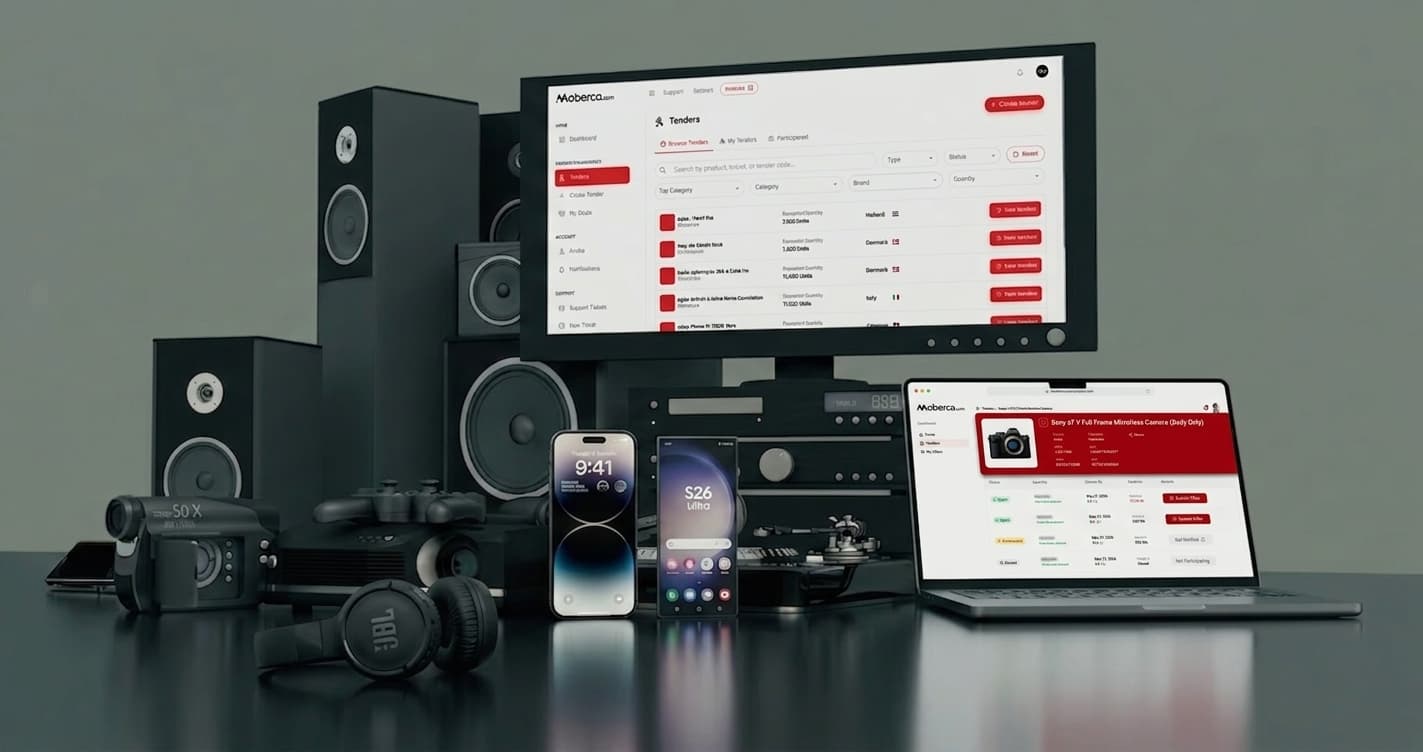
Wholesale Electronics, Sourced Globally Through Verified B2B Tenders
Learn how wholesale electronics trading works, who is involved on each side of the deal, and how a tender-based B2B platform changes the process for both buyers and suppliers.
What Is Wholesale Electronics Trading? A Beginner’s Guide
Anyone sourcing electronics for the first time in bulk quantities will run into terms like MOQ, trade pricing, and tenders. This guide breaks it all down.
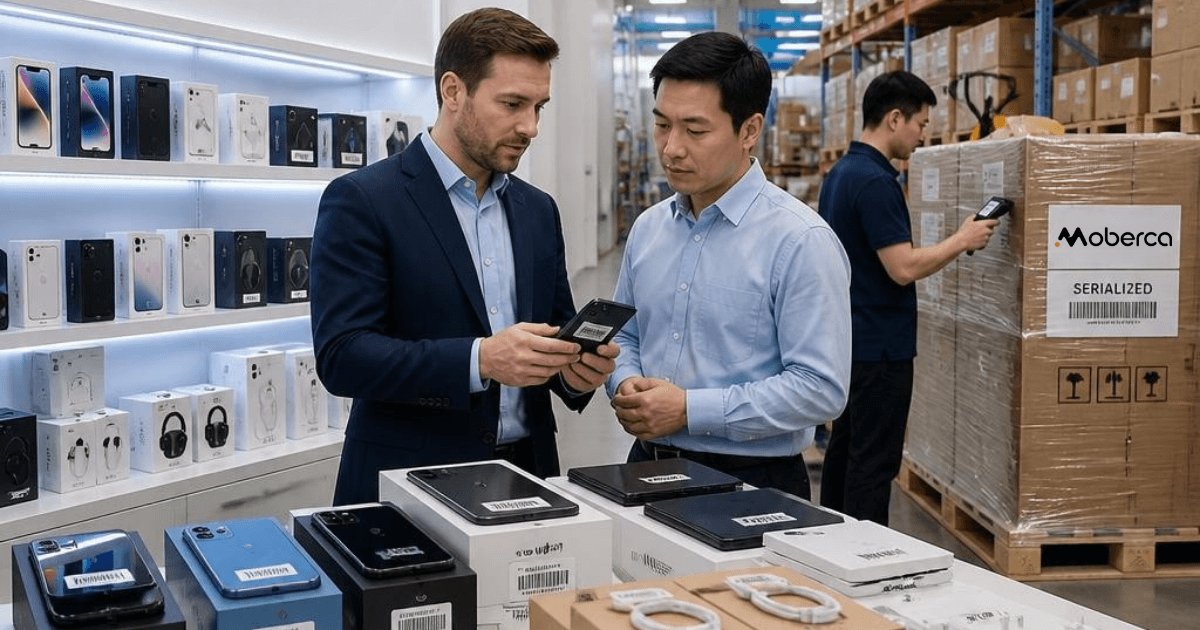
How to Verify a Wholesale Electronics Supplier Before Trading
A single unverified deal can result in counterfeit stock or a seller who disappears after payment. This guide covers the practical checks every buyer should run.